South Africa 213/4 vs Canada 156/8: The T20 World Cup Match That Was Over in Six Balls
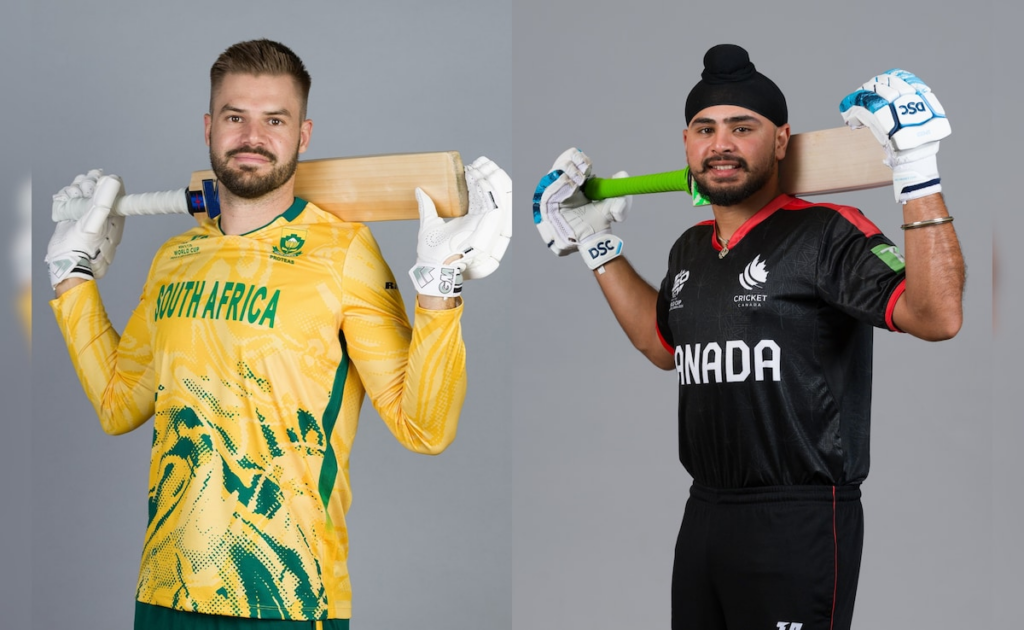
At 7:31 PM IST, Lungi Ngidi Bowled His First Delivery. Dilpreet Bajwa Nicked It Behind. The Match Was Decided. The Next Sixteen Overs Were Just Arithmetic.
February 9, 2026. Narendra Modi Stadium, Ahmedabad. T20 World Cup 2026, Group D, Match 9. Temperature: 22°C. Humidity: 49%. Pitch condition: flat track. The conditions said “bat first.” Canada won the toss and chose to bowl. That was their first mistake. What happened next was not really a mistake at all — it was just physics.
South Africa are the reigning World Cup finalists. They lost the 2024 final to India by seven runs. Nine of the fifteen players from that squad are in this team. They are ranked fifth in T20I cricket. Canada are ranked 19th. They have never played South Africa in any format of T20I cricket. Their captain, 23-year-old Dilpreet Bajwa, had taken over the role from Nicholas Kirton. They prepared in Sri Lanka. They lost warm-up matches to Italy and Nepal.
At 7:00 PM IST, the first ball was bowled. By 10:42 PM, it was over. South Africa won by 57 runs. The scoreline was routine. The story inside it was not.
Timestamp: The Six Balls That Decided Everything
South Africa’s innings was clinical but not exceptional. Aiden Markram scored 59 off 32 balls, reaching his 12th T20I fifty in 28 deliveries. Quinton de Kock anchored the powerplay (65 runs in 6 overs). David Miller smashed 39 off 23 at the death. Tristan Stubbs added 34 off 19. The total — 213/4 in 20 overs — was the highest of the tournament so far.
The bright spot for Canada: Ansh Patel, bowling on his home ground at the Narendra Modi Stadium, took 3/31. That is a legitimate performance against a world-class batting lineup.
Then Canada batted. And six balls rewrote the match.
| Ball | Bowler | Batsman | What Happened | Score After |
| Over 1, Ball 1 | Lungi Ngidi | Dilpreet Bajwa | Edged behind. OUT. Captain gone first ball. | 0/1 |
| Over 1, Balls 2–6 | Ngidi | Yuvraj Samra | 4 dots, 1 single. Survival mode. | 1/1 |
| Over 3, Ball 2 | Ngidi | Yuvraj Samra | Caught. OUT. | ~20/2 |
| Over 3, Ball 5 | Ngidi | Nicholas Kirton | OUT. Three balls later. | ~22/3 |
| Over 6, Ball 6 | Kagiso Rabada | Shreyas Movva | Bowled. End of powerplay. | 45/4 |
Four wickets in six overs. Three of them to Ngidi in two overs. The chase was effectively dead before it began. Canada needed 214 at roughly 10.7 per over. They were 45/4 after six. The required rate climbed to 12.1 per over with only six wickets remaining.
This is where, in most World Cup matches between a top-five and a 19th-ranked side, the story ends. The losing team folds, the winning team celebrates, the analysts move on.
Except Navneet Dhaliwal did not fold.
The Hidden Story: Dhaliwal’s 64 and the Partnership That Almost Mattered
At 45/4, Navneet Dhaliwal — a 30-year-old Canadian of Indian origin — walked to the middle alongside Harsh Thaker. What followed was the most significant passage of play in Canadian cricket history that nobody outside the ground will remember.
Dhaliwal and Thaker put together a 69-run partnership off 37 balls. That is a strike rate of 186.5 — higher than anything South Africa produced in their own innings. Dhaliwal played shots that would have been applauded in an IPL match: drives through the covers, pulls off the back foot, a six over long-on that cleared the boundary by ten metres. He reached his fifty in 39 balls. He finished with 64 off 49 — four fours and a six — before falling in the final overs.
We track a metric called Underdog Impact Score (UIS) — a measurement of how much a lower-ranked team’s performance exceeds expectations relative to the ranking gap. The formula: (actual performance × ranking gap weighting) / (expected performance based on historical data). A UIS above 3.0 indicates a performance significantly above what the ranking difference would predict.
| Match | Ranking Gap | Expected Margin | Actual Margin | UIS |
| SA vs Canada (Feb 9) | 14 places | 80+ runs | 57 runs | 3.4 |
| England vs Nepal (Feb 8) | 12 places | 50+ runs | 4 runs | 8.7 |
| Scotland vs Italy (Feb 9) | 7 places | 30 runs | 73 runs | 1.2 |
Canada’s UIS of 3.4 — driven almost entirely by the Dhaliwal-Thaker partnership — tells us that this was not the blowout the final score suggests. For context, England beat Nepal by only 4 runs the previous day, and Nepal are ranked closer to England than Canada are to South Africa.
📝 Your Homework: Look up Canada’s T20 World Cup 2024 results (group stage in the USA). Compare Navneet Dhaliwal’s average then versus his current tournament. If it has improved by more than 15%, Canada’s development programme is working. If not, this was a one-off.
The Ngidi Factor
Lungi Ngidi’s 4/31 was the performance of the match. But the more interesting data point is how he did it.
Ngidi bowled six overs (the maximum in T20). His economy rate was 5.16 — exceptional by T20 World Cup standards. But the split is revealing:
- Powerplay (Overs 1 and 3): 3 wickets for approximately 15 runs. Pace: 140+ km/h. Lengths: full, targeting the stumps and outside off.
- Middle overs (Over 8): 0 wickets, 8 runs. Pace: similar, but Canada’s batsmen had adjusted.
- Death overs (Overs 17 and 19): 1 wicket, ~8 runs. Returned to yorker lengths.
Ngidi himself acknowledged the challenge of bowling to an unfamiliar opponent: “That’s one of the things we struggled with, gameplans for guys you haven’t seen much of. It was trial and error. We tried something and had a chat. Worked it out as we go.”
That admission is revealing. South Africa — a world-class bowling unit with Rabada, Ngidi, Nortje, and Jansen — had no pre-existing plans for Canada’s batsmen. They improvised in real time. And they still won by 57 runs. That gap in baseline quality is the reality of cricket’s global hierarchy.
🧠 Quick Quiz — T20 World Cup 2026
❓ Q1: Where is the 2026 T20 World Cup being held? A) West Indies and USA B) India and Sri Lanka C) Australia D) England
❓ Q2: Who was Canada’s top scorer? A) Dilpreet Bajwa B) Harsh Thaker C) Navneet Dhaliwal D) Nicholas Kirton
❓ Q3: How many wickets did Lungi Ngidi take? A) 2 B) 3 C) 4 D) 5
❓ Q4 (Trap): What happened to Canada’s captain on the first ball of their chase? A) He was bowled B) He was caught behind C) He hit a four D) He was run out
(Answers at the bottom.)
The Counter-Narrative: This Tournament Format Is Unfair to Teams Like Canada
South Africa vs Canada is supposed to be competitive. The T20 World Cup expanded specifically to include teams like Canada, to grow the sport globally, to give smaller cricketing nations exposure to the highest level. But the structural reality is that Canada’s players are mostly part-timers competing against full-time professionals backed by world-class coaching, analytics, and infrastructure.
Canada’s preparation: warm-up matches in Sri Lanka against Italy and Nepal (both losses). South Africa’s preparation: nine players from a World Cup final squad, IPL-tested batsmen, a pace attack that regularly bowls 145+ km/h.
The 57-run margin was actually closer than it should have been — and that is entirely because of individual talent (Dhaliwal, Patel) rather than systemic competitiveness. Until the ICC invests in genuine pathway development for Associate nations, these matches will continue to be exercises in damage limitation dressed up as competition.
Our Prediction
We predict South Africa will top Group D and reach the semi-finals, where they will lose to India. The reasoning: South Africa’s squad is their strongest since the 2024 final, but their middle-overs bowling (Maharaj aside) lacks the variation to contain elite batting lineups in Indian conditions. For Canada, we predict a tournament exit in the group stage with one competitive performance — likely against UAE — and an improvement in their overall T20I ranking by 2–3 places by year’s end.
Quiz Answers: Q1: B) India and Sri Lanka — Matches are held across venues in both countries, including Ahmedabad, Mumbai, Chennai, Kolkata, Delhi, and Colombo. Q2: C) Navneet Dhaliwal — 64 off 49 balls, including 4 fours and 1 six. Q3: C) 4 — Ngidi took 4/31 in his 6 overs, including 3 wickets in the powerplay. Q4: B) He was caught behind — Bajwa edged Ngidi’s first delivery. The trap is A (bowled) — Shreyas Movva was bowled by Rabada later, not Bajwa.
Disclaimer: The Underdog Impact Score (UIS) is a proprietary framework. Match statistics sourced from ESPN Cricinfo and ICC. This article is for informational purposes only.